

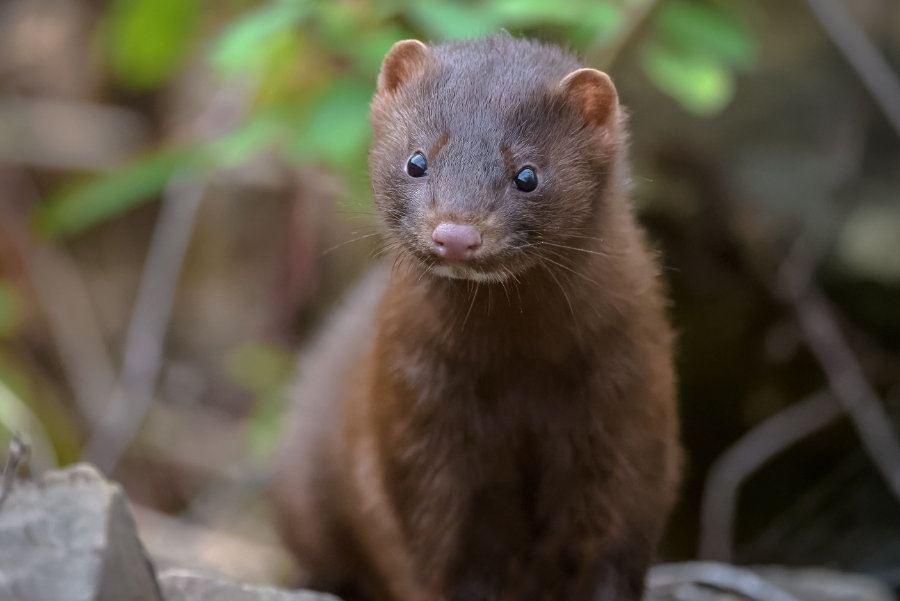
Denmark is moving toward ending commercial mink farming, with the government announcing that it will not seek a special exemption from forthcoming European Union rules that restrict the practice. The decision means the country’s remaining mink farms are expected to close by August 7, 2029.
The announcement, made on October 23, marks a significant development for an industry that once made Denmark one of the world’s leading producers of mink fur.
EU Restrictions Drive the Decision
The European Union’s planned restrictions on mink farming are scheduled to take effect on August 7, 2027. Denmark had considered seeking an exemption that would allow domestic mink farmers to continue operating, but the government has decided against pursuing that option.
Under the announced timetable, a transition period will allow existing operations time to wind down, with the final deadline for ending mink farming set for August 7, 2029.
The decision follows growing attention across Europe to animal welfare and the conditions in which animals are raised for fur production.
An Industry Reduced to Just Seven Farms
Denmark’s mink industry has contracted dramatically in recent years. According to the government’s announcement, only seven mink farms remained in the country as of August 2026.
The industry was once considerably larger and played an important role in Denmark’s agricultural exports. However, the combination of the COVID-19 pandemic, regulatory uncertainty and changing conditions for fur production has significantly altered its future.
The government has also pointed to the industry’s limited economic significance as a factor in its decision not to seek an exemption.
The Legacy of Denmark’s COVID-19 Mink Crisis
The latest development comes several years after Denmark’s controversial decision to cull its entire farmed mink population during the COVID-19 pandemic.
In 2020, Danish authorities ordered the culling of millions of mink after concerns emerged that coronavirus variants detected in farmed animals could pose risks to public health. The decision had major consequences for farmers and prompted considerable political and legal controversy.
The temporary restrictions eventually expired at the end of 2022, and some mink farming resumed in 2023.
The newly announced phase-out is separate from the pandemic-era measures. Rather than being an emergency public-health response, the current development is linked to the forthcoming EU restrictions and Denmark’s decision not to pursue an exemption.
What Happens Next?
With the government declining to seek special treatment under the EU rules, Denmark’s remaining mink farmers face a defined timeline for ending their operations.
The transition period is intended to give affected businesses time to prepare for closure. The announcement also signals a broader shift in the future of fur production in Europe, where animal welfare concerns and changing regulations have placed increasing pressure on the industry.
For Denmark, once a major force in the international mink-fur market, the planned end of mink farming represents a substantial change in a sector that has experienced years of upheaval.
If the announced timetable proceeds as planned, commercial mink farming in Denmark will come to an end by August 7, 2029.
Editorial note: This article is based on announcements reported on October 23, 2026. Before publication, verify the final legal status and wording of the EU restrictions against official Danish government and EU sources, particularly the distinction between an EU-wide restriction and Denmark’s national phase-out arrangements.