After years of confinement, two brown bears have reached a sanctuary in Ireland. Their 8,000-mile journey involved more than 100 people, complex international negotiations and delays caused by war. Now, their recovery is beginning in the quiet of a forest.
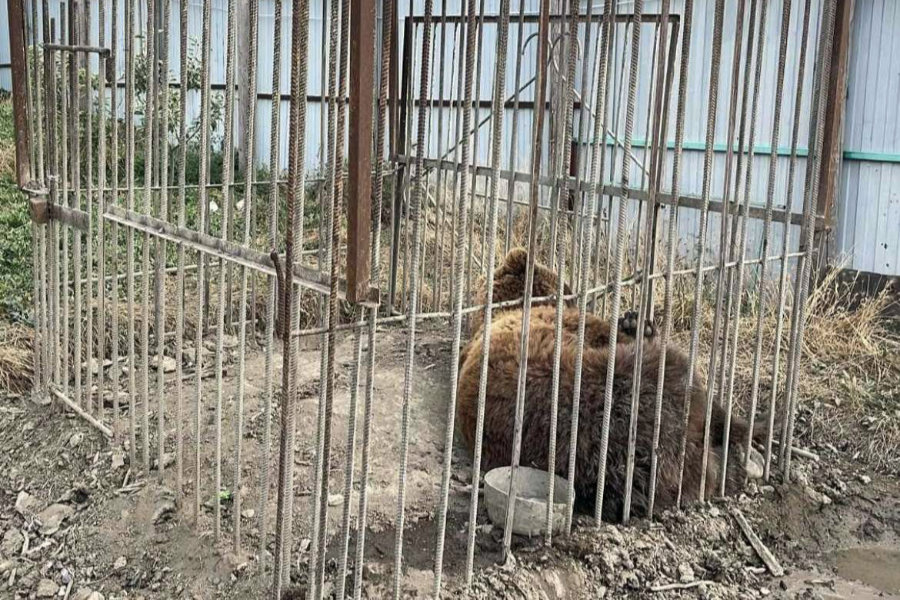
For years, Bu and Tyapa knew a world of metal bars, cramped enclosures and limited access to fresh water. Today, the two brown bears are taking their first tentative steps into a woodland habitat in Ireland, where their carers hope they can begin to recover from years of confinement.
The bears arrived at Wild Ireland, a wildlife sanctuary in County Donegal, on August 3, 2026, following a five-year rescue effort that stretched across Russia, the United Arab Emirates, and Ireland. After veterinary treatment and quarantine, they were introduced to their new forest surroundings on September 7.
Their arrival marked the end of an extraordinary international operation. But for the bears, it was the beginning of another, more gradual journey: learning to live in a world they had rarely been allowed to experience.
Two bears, two histories of confinement
Bu, a female brown bear, had previously been used in a circus before being surrendered to the Right to Life Sanctuary in Dagestan, a republic in southern Russia. There, she spent years in a small indoor cage with limited access to water.
Tyapa came from a petting zoo. According to the rescue team, he was reportedly being raised for taxidermy—a practice that would have ended with his death. His enclosure measured approximately 8 feet by 8 feet and 6 feet high, leaving him unable to stand upright. It had no roof to shield him from the region’s extreme summer heat or winter cold. He had no water dish and depended on carers to bring him water by way of a hose.
But the small dog and cat sanctuary where the bears were eventually housed did not have the facilities to meet their long-term needs.
Wild Ireland founder and director Killian McLaughlin first learned about their circumstances in 2021 through Bears in Mind, a Netherlands-based animal welfare charity. He committed to bringing both bears to Ireland.
What followed was a rescue effort complicated by international conflict, transport restrictions, and the challenge of safely moving two large animals across several countries.
A rescue repeatedly delayed by war
The original plan was to transport the bears overland through Ukraine. Russia’s full-scale invasion of Ukraine in February 2022 made that route impossible, and sanctions and international transport restrictions created further obstacles.
McLaughlin, a qualified solicitor, worked with legal advisers and volunteers in Russia to establish a route that complied with the necessary regulations. Help eventually came from Dima and Yana Kim, who operate Tiger House, a sanctuary near St Petersburg that cares for former circus tigers. Yana, a veterinarian, was able to oversee the bears’ medical assessments and treatment.
In October 2025, the couple drove for 36 hours to reach Dagestan. The bears had to be freed from their rusting steel cages, sedated, and transferred into secure transport crates. After another long journey, they reached Tiger House, where they began quarantine and veterinary care.
Tests revealed serious kidney problems associated with prolonged dehydration. Both bears were severely malnourished and showed signs of psychological trauma. They received regular food, fresh water, and medical treatment while preparations continued for their transfer to Ireland. Even then, the journey was not straightforward. With direct flights between Russia and the European Union unavailable because of the war, the rescue team arranged an alternative route through Abu Dhabi.
Escalating conflict involving Iran in early 2026 caused further airspace closures and flight disruption, threatening to delay the operation again. In June, specialist animal transport company Intradco Global and Etihad Cargo joined the effort. Intradco provided its services free of charge, while Etihad agreed to carry the bears at a substantially reduced price.
More than 100 people across several countries ultimately contributed to the operation, from veterinarians and transport specialists to volunteers, lawyers, and airport teams.
The bears flew from Moscow to Abu Dhabi and onward to Dublin. McLaughlin travelled to Abu Dhabi to oversee their transfer and accompany them on the final flight to Ireland. From Dublin, they were transported by road to Wild Ireland, where they entered quarantine.
McLaughlin described the international cooperation as a source of hope amid the conflicts that had repeatedly threatened the rescue. “There was kindness and compassion in the middle of so much strife and war,” he said. “Maybe Bu and Tyapa’s story offers a bit of hope.”
Learning to feel safe
At Wild Ireland, the immediate priorities were medical recovery, security, and a gradual introduction to their new surroundings. The early results have been encouraging. According to the sanctuary, both bears have gained weight, their coats have improved, and follow-up blood tests show their kidney function has returned to normal following treatment and reliable access to fresh water.
Their psychological adjustment, however, is proving more complicated. Despite being brown bears—animals associated with forests, swimming, and exploring—Bu and Tyapa remain frightened of aspects of their new environment, including open spaces, trees moving in the wind and deep water. They often retreat to smaller houses within their habitat, where enclosed surroundings provide a sense of familiarity.
For their carers, these behaviors underline the importance of allowing the bears to set their own pace. “Things we might expect a bear to enjoy can frighten them because they have never had the chance to experience them before,” McLaughlin said.
The sanctuary has designed a woodland environment with trees to climb, a pond, logs and rocks to investigate, and opportunities to forage for hidden food. Smaller shelters give the bears somewhere to retreat whenever they feel overwhelmed. The aim is not simply to provide more space, but to give the animals control over their surroundings—the freedom to explore, withdraw, and gradually build confidence.
“We have experience rehabilitating rescued animals, and we will work at their pace,” McLaughlin said. “Our job is to give them what they need to feel safe.”
A new home, and a longer road ahead
Wild Ireland opened in 2019 in Burnfoot, County Donegal, and provides sanctuary and rehabilitation for rescued animals, including brown bears, wolves, and lynx.
The arrival of Bu and Tyapa brings the number of brown bears at the sanctuary to four. Brown bears once roamed Ireland, but disappeared from the island thousands of years ago.
Visitors have been offered the opportunity to see the newcomers during the October midterm break, although the sanctuary has stressed that sightings cannot be guaranteed. The bears can move out of public view whenever they choose. That choice is central to their rehabilitation. After years spent in restrictive enclosures, they are now being given the opportunity to decide where to go and when to retreat.
A documentary following the rescue mission from its earliest stages is expected to be released in 2027 by Moondance Productions.
For McLaughlin, and the many people who helped bring the bears to safety, the completion of the journey is a significant achievement. Yet the most important part of their story may be what happens next. Bu and Tyapa have survived years of confinement, serious health problems, and a journey across international borders. Their physical recovery is underway, but learning to feel secure in their new surroundings will take patience.
After five years of planning, repeated setbacks and an operation spanning several countries, the bears have finally reached a place where they can begin to live on their own terms. Their journey to Ireland is over. Their recovery is just beginning.